Why Honey Comes in Every Shade: From Snow-White to Espresso-Dark
{“visual”:false,”legacy”:false}
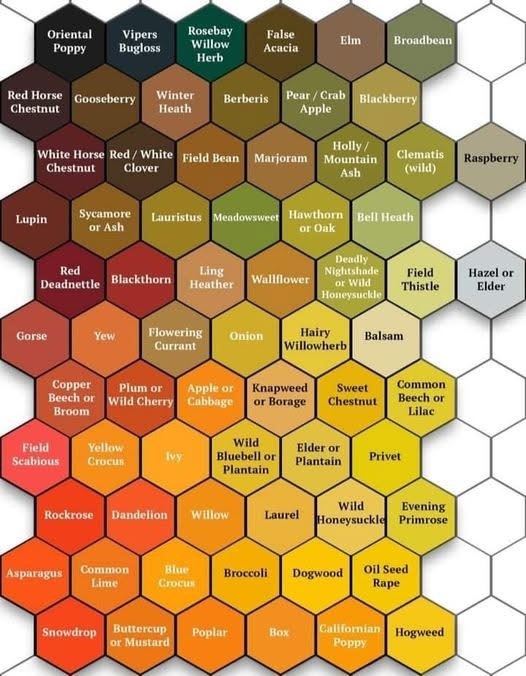
{“visual”:false,”title”:””,”text”:”Why Honey Comes in Every Shade—from Snow-White to Espresso-Dark\r\n\r\nNext time you’re at a farmers’ market, line up a few jars of honey. You’ll see a natural rainbow: crystal-clear acacia, sunshine-gold clover, coppery wildflower and almost black buckwheat. That color isn’t just pretty—it’s a shorthand for what’s inside the jar.\r\n\r\nFlower power\r\nBees don’t make color, plants do. Each blossom hands the bee a nectar cocktail of sugars plus pigments, minerals and aromatic compounds. Pale honeys, such as acacia or orange blossom, come from nectars low in dark-hued polyphenols and metals. Heather, chestnut and buckwheat nectars brim with those darker ingredients, producing richer, deeper tones once the bees evaporate most of the water.\r\n\t\r\nMeasuring the rainbow\r\nPackers grade bulk honey on the USDA Pfund scale, which runs from “water white” to “dark amber.” It’s basically a ruler held against an amber wedge: the farther the light travels through the wedge before the honey matches, the darker the sample. Scientists now use tiny spectrophotometers for an even finer reading, helpful in spotting diluted or artificially colored products.\r\n\r\nColor = flavor\r\nGenerally, the darker the honey, the bolder the taste. Light clover honey whispers of vanilla and fresh hay; dark buckwheat can be malty, earthy and even slightly bitter. Those same dark pigments are potent antioxidants. Lab tests show buckwheat honey may pack four or five times more polyphenols than pale varieties—great if you drizzle it over yoghurt or into a smoothie.\r\n\r\nWhat happens after harvest\r\nHeat and time can shift the shade, too. Warming honey to bottle it or melt crystals speeds up the Maillard reaction—the same browning that darkens toast—creating deeper color and caramel notes. Long storage or hot kitchen shelves will gradually do the same, and a compound called HMF (hydroxymethylfurfural) builds up as a tell-tale sign of age or overheating.\r\n\r\nBuying tips\r\nChoose color to match the job: pale honeys for tea or baking where you don’t want extra flavor; dark honeys for marinades, barbecue sauces or cheese boards.\r\n\r\nStore jars in a cool, dark cupboard to keep the original hue (and delicate aromas) longer.\r\n\r\nCrystals are natural simply warm the jar gently in hot water, and the color you see after it re-liquefies is the best indicator of its true character.\r\n\r\nIn short, a jar’s color is nature’s label, a quick clue to its botanical roots, nutritional punch and flavor personality. Enjoy the spectrum!\r\n\r\n\r\n\r\n\r\n\r\n\r\n\r\n”,”filter”:”1″,”legacy”:false}
{“visual”:false,”title”:””,”text”:”Why Honey Comes in Every Shade—from Snow-White to Espresso-Dark\r\n\r\nNext time you’re at a farmers’ market, line up a few jars of honey. You’ll see a natural rainbow: crystal-clear acacia, sunshine-gold clover, coppery wildflower and almost black buckwheat. That color isn’t just pretty—it’s a shorthand for what’s inside the jar.\r\n\r\nFlower power\r\nBees don’t make color, plants do. Each blossom hands the bee a nectar cocktail of sugars plus pigments, minerals and aromatic compounds. Pale honeys, such as acacia or orange blossom, come from nectars low in dark-hued polyphenols and metals. Heather, chestnut and buckwheat nectars brim with those darker ingredients, producing richer, deeper tones once the bees evaporate most of the water.\r\n\t\r\nMeasuring the rainbow\r\nPackers grade bulk honey on the USDA Pfund scale, which runs from “water white” to “dark amber.” It’s basically a ruler held against an amber wedge: the farther the light travels through the wedge before the honey matches, the darker the sample. Scientists now use tiny spectrophotometers for an even finer reading, helpful in spotting diluted or artificially colored products.\r\n\r\nColor = flavor\r\nGenerally, the darker the honey, the bolder the taste. Light clover honey whispers of vanilla and fresh hay; dark buckwheat can be malty, earthy and even slightly bitter. Those same dark pigments are potent antioxidants. Lab tests show buckwheat honey may pack four or five times more polyphenols than pale varieties—great if you drizzle it over yoghurt or into a smoothie.\r\n\r\nWhat happens after harvest\r\nHeat and time can shift the shade, too. Warming honey to bottle it or melt crystals speeds up the Maillard reaction—the same browning that darkens toast—creating deeper color and caramel notes. Long storage or hot kitchen shelves will gradually do the same, and a compound called HMF (hydroxymethylfurfural) builds up as a tell-tale sign of age or overheating.\r\n\r\nBuying tips\r\nChoose color to match the job: pale honeys for tea or baking where you don’t want extra flavor; dark honeys for marinades, barbecue sauces or cheese boards.\r\n\r\nStore jars in a cool, dark cupboard to keep the original hue (and delicate aromas) longer.\r\n\r\nCrystals are natural simply warm the jar gently in hot water, and the color you see after it re-liquefies is the best indicator of its true character.\r\n\r\nIn short, a jar’s color is nature’s label, a quick clue to its botanical roots, nutritional punch and flavor personality. Enjoy the spectrum!\r\n\r\n\r\n\r\n\r\n\r\n\r\n\r\n”,”filter”:”1″,”legacy”:false}
{“visual”:false,”title”:””,”text”:””,”filter”:”1″,”legacy”:false} {“visual”:false,”title”:””,”text”:”Why Honey Comes in Every Shade: From Snow-White to Espresso-Dark\r\n\r\nNext time you’re at a farmers’ market, line up a few jars of honey. You’ll see a natural rainbow: crystal-clear acacia, sunshine-gold clover, coppery wildflower and almost black buckwheat. That color isn’t just pretty—it’s a shorthand for what’s inside the jar.\r\n\r\nFlower power\r\nBees don’t make color, plants do. Each blossom hands the bee a nectar cocktail of sugars plus pigments, minerals and aromatic compounds. Pale honeys, such as acacia or orange blossom, come from nectars low in dark-hued polyphenols and metals. Heather, chestnut and buckwheat nectars brim with those darker ingredients, producing richer, deeper tones once the bees evaporate most of the water.\r\n\t\r\nMeasuring the rainbow\r\nPackers grade bulk honey on the USDA Pfund scale, which runs from “water white” to “dark amber.” It’s basically a ruler held against an amber wedge: the farther the light travels through the wedge before the honey matches, the darker the sample. Scientists now use tiny spectrophotometers for an even finer reading, helpful in spotting diluted or artificially colored products.\r\n\r\nColor = flavor\r\nGenerally, the darker the honey, the bolder the taste. Light clover honey whispers of vanilla and fresh hay; dark buckwheat can be malty, earthy and even slightly bitter. Those same dark pigments are potent antioxidants. Lab tests show buckwheat honey may pack four or five times more polyphenols than pale varieties—great if you drizzle it over yoghurt or into a smoothie.\r\n\r\nWhat happens after harvest\r\nHeat and time can shift the shade, too. Warming honey to bottle it or melt crystals speeds up the Maillard reaction—the same browning that darkens toast—creating deeper color and caramel notes. Long storage or hot kitchen shelves will gradually do the same, and a compound called HMF (hydroxymethylfurfural) builds up as a tell-tale sign of age or overheating.\r\n\r\nBuying tips\r\nChoose color to match the job: pale honeys for tea or baking where you don’t want extra flavor; dark honeys for marinades, barbecue sauces or cheese boards.\r\n\r\nStore jars in a cool, dark cupboard to keep the original hue (and delicate aromas) longer.\r\n\r\nCrystals are natural simply warm the jar gently in hot water, and the color you see after it re-liquefies is the best indicator of its true character.\r\n\r\nIn short, a jar’s color is nature’s label, a quick clue to its botanical roots, nutritional punch and flavor personality. Enjoy the spectrum!\r\n\r\n\r\n\r\n\r\n\r\n\r\n\r\n”,”filter”:”1″,”legacy”:false}